Skip to content
PR

(About)

From fixing things for people to building systems they can rely on.

I’m Parth, a software engineer in London. This is the short story of how I got here, and why I care so much about software that can be checked, not just trusted.

Chapter 01

Operations & IT support · Kukreja & Associates, Vadodara, India

I learned reliability from the people it lets down.

Before I wrote production code, I was the person people called when something stopped working. Across hardware, software, networks and internal systems, I supported more than 50 users.

I learned to look past the symptom to the recurring fault, and to automate the work that kept coming back. That alone saved more than 10 hours of manual effort every month.

It taught me the lesson I still build around: reliability is not a line on a slide. It is what someone feels when their work does not break.

50+

users supported
Chapter 02

BSc (Hons) Computing Systems · Ulster University, London

Then I wanted to build the systems, not just fix them.

In London I studied Computing Systems and moved from fixing operational problems to designing systems around them: APIs, full-stack applications, cloud services, distributed state, testing and explicit data boundaries.

I made the Dean's List in my first and second years. A pattern emerged in everything I built: avoid guesses, preserve evidence, and make failure visible before it reaches a user.

2×

Dean's List, Years 1 and 2

Chapter 03

LYTA · PARTHA · KALYX · ReturnProof · OWASP OpenShield

Every project had to prove what it claimed.

I built LYTA, a live edge-native workspace where every answer cites its source. I lead PARTHA, a repository-intelligence platform, running weekly planning with a small team. My dissertation, KALYX, answers a hard question after a breach: were the logs changed first?

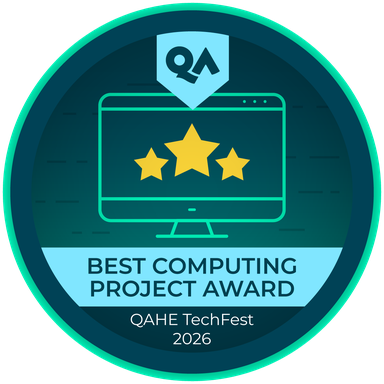
In open source, I am an official maintainer of OWASP OpenShield, an OWASP Incubator Project for Azure cloud security. I review and merge pull requests, triage and prioritise issues, and own the test suite and documentation as CODEOWNER. In 2026 I received the QA Ltd Best Computing Project Award.

4 + 1

systems built, plus open source

Chapter 04

Student Representative · SSCC member · Mentor

The best things I helped build were teams.

As a Student Representative and Staff-Student Consultative Committee member from 2024 to 2026, I raised student concerns and helped shape module and programme discussions.

I mentored more than 15 peers on practical AI workflows, Git and CI/CD, and ran workshops for first-year international students on settling into UK study, ethical AI use, academic integrity, GitHub, LinkedIn and open-source contribution.

15+

peers mentored

Chapter 05

Graduated September 2026

First Class Honours, and ready for what's next.

I graduated with a First Class Honours degree. Now I'm looking for a full-time software engineering role in London, building AI-native products and the backend systems behind them.

I can start immediately.

1st

Class Honours

(What I hold to)

Four rules the work keeps teaching me.

  1. 01

    Evidence over assumptions

    Decisions should be traceable to the data and rule that produced them.

  2. 02

    Failure is part of the design

    APIs, streams, state, and external services need controlled failure paths.

  3. 03

    Boundaries create reliability

    Authentication, ownership, state, and data access should have explicit responsibility.

  4. 04

    A system is not finished at the backend

    Real engineering includes interfaces, testing, deployment, documentation, and user experience.

(The record)

The evidence behind the story

Degree, awards, credentials and leadership, each one verifiable.

Academic standing

  • BSc (Hons) Computing Systems, Ulster University, London

  • Awarded September 2026

  • First Class Honours

  • Dean's List, Years 1 and 2

  • QAHE TechFest 2026 Best Computing Project Award badge

    Award

    Best Computing Project Award, QA Ltd (2026)

    University technology fest.

Leadership and contribution

  • Project owner and maintainer of PARTHA, coordinating a small project team.

  • Student Representative and Staff-Student Consultative Committee member, 2024 to 2026.

  • Mentored 15+ peers on AI workflows and practical development tooling.

  • Delivered workshops and seminars for first-year students on settling into university study, ethical AI use and academic integrity, alongside job-search preparation covering GitHub, LinkedIn and open-source contribution.

(Technical stack)

The technologies these systems are built on

Tools used across the systems in this portfolio.

  • Python

  • TypeScript

  • FastAPI

  • React

  • SQL + PostgreSQL

  • Cloudflare Workers

  • Workers AI

  • RAG + embeddings

  • Docker

  • Microsoft Azure

  • GitHub Actions

  • pytest + Playwright

Frontend
Typed React interfaces that make system state legible, with accessible responsive layouts.
Backend and data
Python and TypeScript services with validated APIs in FastAPI, Django and Django Ninja, PostgreSQL schemas and migrations, plus Redis for caching and queues.
Cloud and systems
Containerised delivery onto Azure and Cloudflare Workers, with Durable Objects where state ownership must be explicit.
Testing and AI
Unit, API and browser tests, alongside retrieval and model features with output validation, model evaluation and security tooling.

Engineering practice: AI-assisted development with modern coding assistants, backed by human review, tests and version control.

That’s the story. Here’s the evidence.